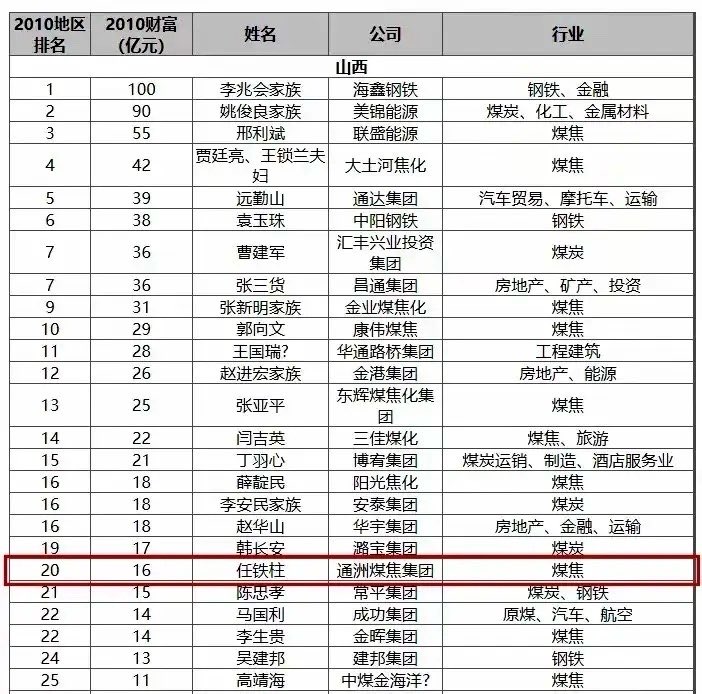
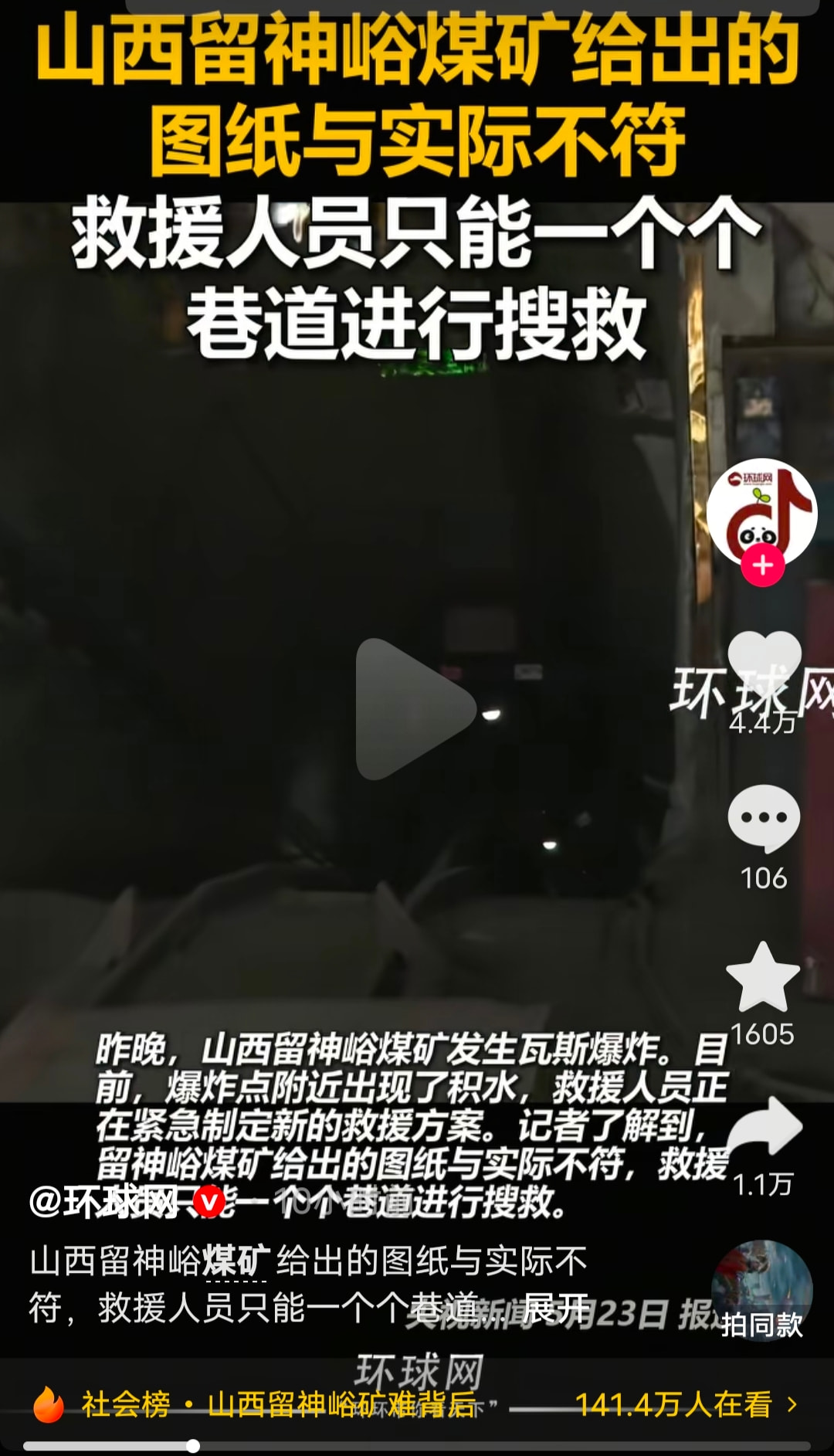
At first, I learned some specific facts about Shanxi’s coal industry from people’s discussions online, such as issues like ensuring coal supply, and from that I could see the contradiction between Shanxi’s local coal capitalists and the central monopoly bourgeoisie of the Chinese revisionist regime. Combined with the recent series of exposures by the revisionist authorities, such as local coal companies “secretly digging mine tunnels” and underreporting the number of people involved, it really does seem to be true.
Why do the local coal bourgeoisie secretly build coal mine tunnels? The purpose is to mine far beyond quota and to extract coal outside the mining areas demarcated by the central government. So where does all this coal go? The answer is simple: it is probably resold. These coal resources do not need to be taxed under the company’s identity or supplied for use by the Chinese revisionist government (the so-called “west coal, east transport” policy), but are instead privately resold, yielding huge profits.
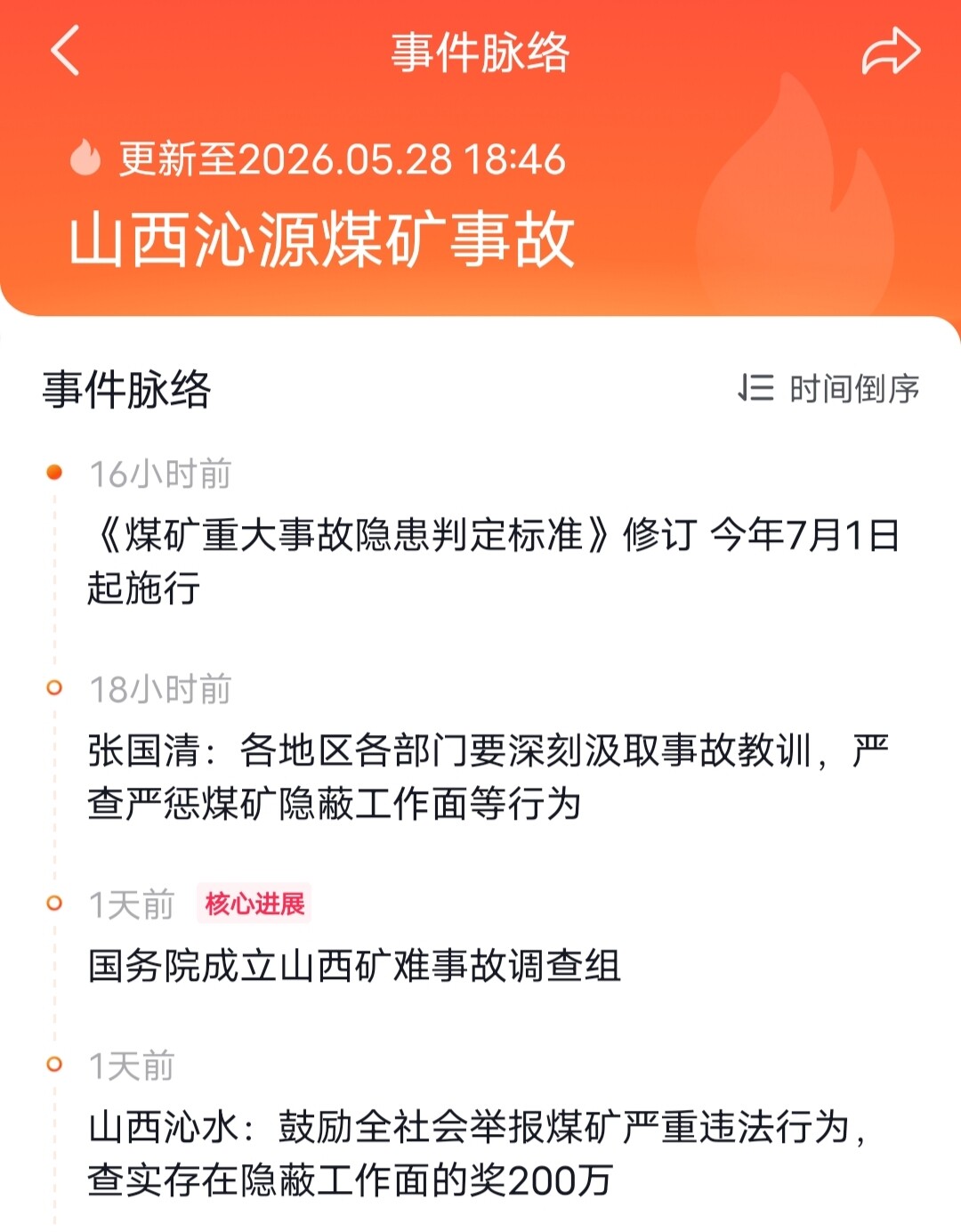
The bureaucratic monopoly bourgeoisie of the Chinese revisionist regime is extremely dissatisfied with this behavior, so it is urgently demanding stronger monopoly control over the local coal industry. This can mainly be seen from the unusually extreme measures the Chinese revisionist government has taken in response to recent mine disasters. At the moment the disaster occurred, the Chinese revisionist government sent Vice Premier Zhang Guoqing of the State Council to the scene to “direct” rescue efforts. Of course the Chinese revisionist regime does not actually care about rescue; the purpose of sending the vice premier, I assume, was probably to intimidate people and let the local coal companies know that this would not end so easily. Then the Supreme People’s Procuratorate began a supervised investigation; Shanxi’s local emergency management department encouraged reports of coal mine violations; and the State Council specifically set up an investigation team. These actions are completely different from the Chinese revisionist government’s previous attitude toward industrial and mining accidents. Even in the past, when major accidents caused over a hundred deaths, the Chinese revisionist government never took such a “high-profile” approach; in fact, the vast majority of accidents were directly suppressed.
But while analyzing this, I hit a question: why is it precisely now that they want to strengthen control over the coal industry? I set that question aside for the moment. Later, while talking with a coworker about whether China and the US might go to war, and while seeing the broadcast on Xinwen Lianbo about the negotiations over the Strait of Hormuz, I began to wonder whether this might be related to the struggle for hegemony between US and Chinese imperialism.
The United States is highly dependent on Middle Eastern oil (before invading Iran, the US had already done another thing: it staged a coup, kidnapped Venezuela’s president, and plundered Venezuela’s oil), but China is also heavily dependent on oil imports. If a world war is provoked and the United States occupies the Strait of Hormuz, then what would Chinese imperialism rely on to support its massive power grid, industrial production, and weapons production? Probably only coal. Even the Chinese revisionist government itself admits that “coal plays a ballast role in ensuring my country’s energy security,” and that “at this stage, coal is still the main energy source in my country.” (This is an official report from 2024.) After a struggle with US imperialism over the Iran issue, Chinese imperialism should have discovered its own “weak spot” in energy, so the idea of strengthening control over the coal industry and bringing all coal resources firmly into the hands of the bureaucratic monopoly bourgeoisie is very, very urgent. That is probably my current guess.
So this Shanxi mine disaster probably won’t be handled like previous mine disasters, where after a few days the public discussion would be suppressed and the revisionist officialdom would ultimately brush it off. The revisionist authorities should have two attitudes toward this incident: first, they must prevent the masses from using it as a rallying point for resistance; but second, they also want to use this incident to crack down on a batch of local coal capitalists who do not obey the bureaucratic monopoly bourgeoisie. So although the incident looks very dramatic, is it really dramatic or just fake drama? I feel it is fake drama. Because up to now, I have not seen any family members of the victims come forward to speak, nor have I seen any related mass resistance online. All the information available has come from reporter interviews and official reports that were reviewed by the government, and the issues have also been limited to safety concerns. So the Chinese revisionist regime definitely imposed martial control at the earliest possible moment. From this perspective, if nothing unexpected happens, this mine disaster should appear unusually “high-profile” for a short period of time, but once the bureaucratic monopoly bourgeoisie of the Chinese revisionist regime has achieved its goal of strengthening monopoly over the coal industry, this matter will immediately disappear from the internet. My guess is that it may not be long before some official in Shanxi is “double-opened” (expelled from the Party and removed from office), or else a notice will be issued across the entire internet; or maybe it will be handled quietly, while only a news item is published saying that some official has taken up a new post in a certain local Shanxi position.
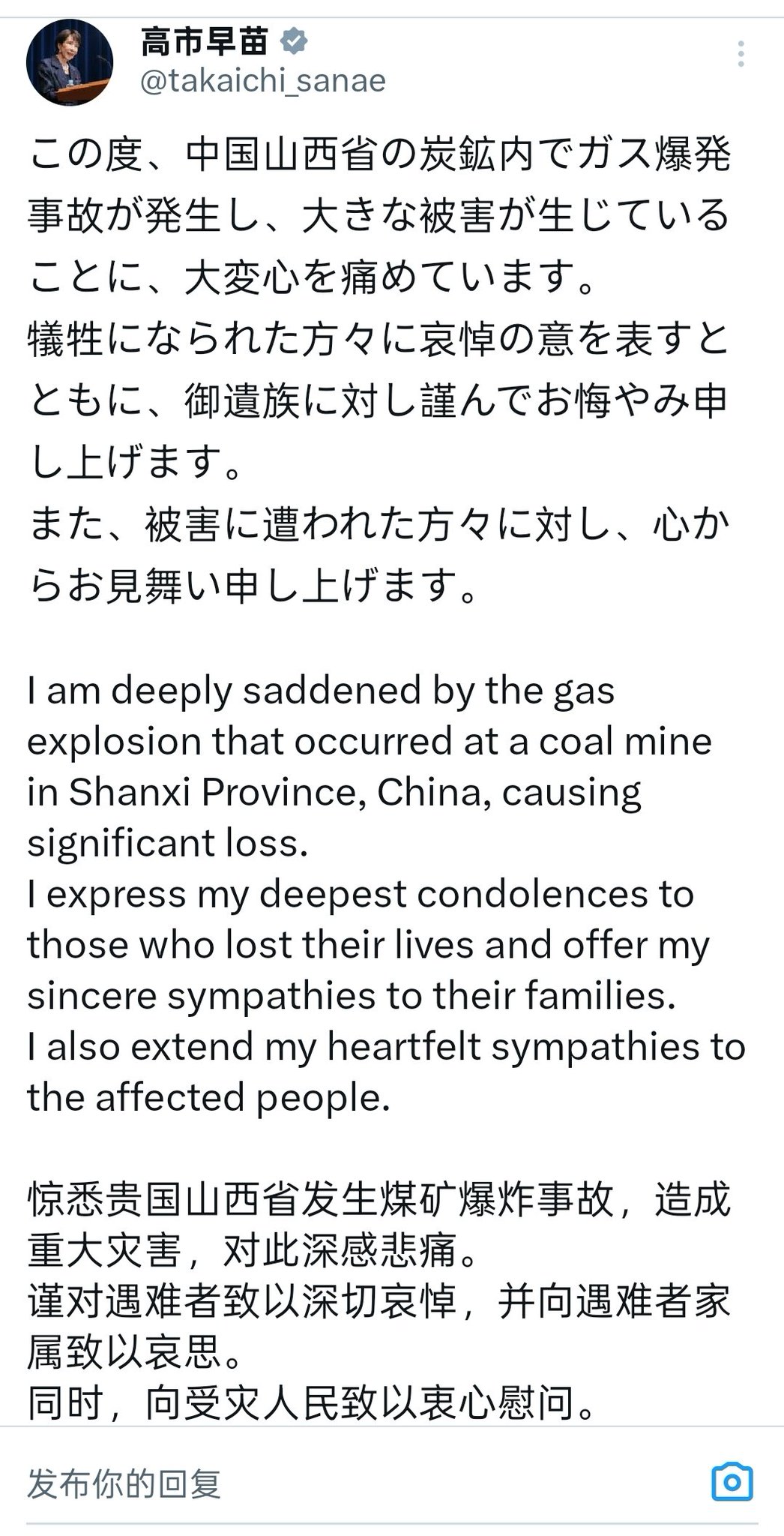
However, there is another thing in this regard that puzzles me: after the mine disaster, Modi of India, Sanae Takaichi of Japan, and Lai Ching-te of Taiwan all posted almost identical messages of condolence. Why is that? Some say it is the sorrow of one’s kindred in misfortune, that these people are trying to take the opportunity to make snide remarks about the accident in China. But I think the actions of these monopoly bourgeoisie figures cannot simply be explained in terms of individual human nature. As for the struggle between China and the US over Iran, energy issues, and so on, I have not paid much attention and do not have a concrete understanding. I hope some comrades can help clear up my confusion.