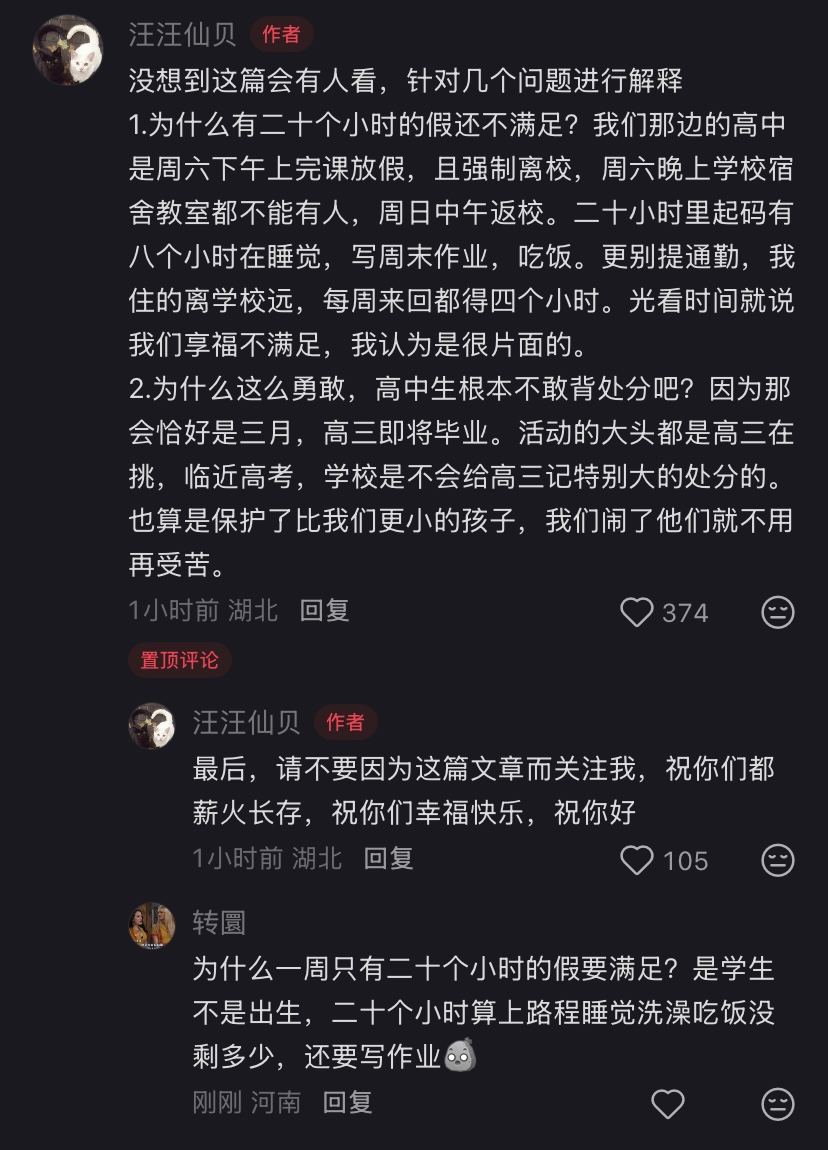
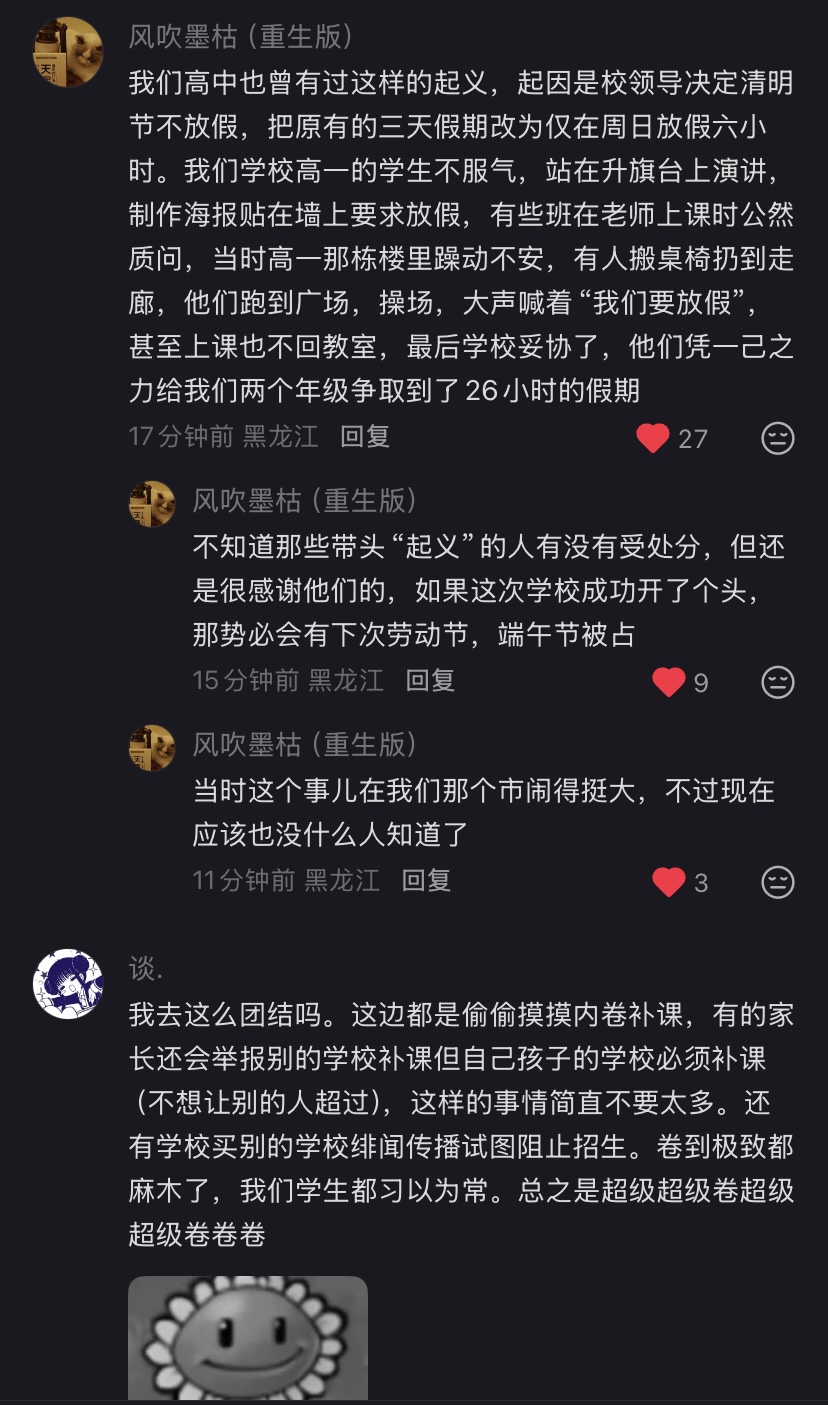
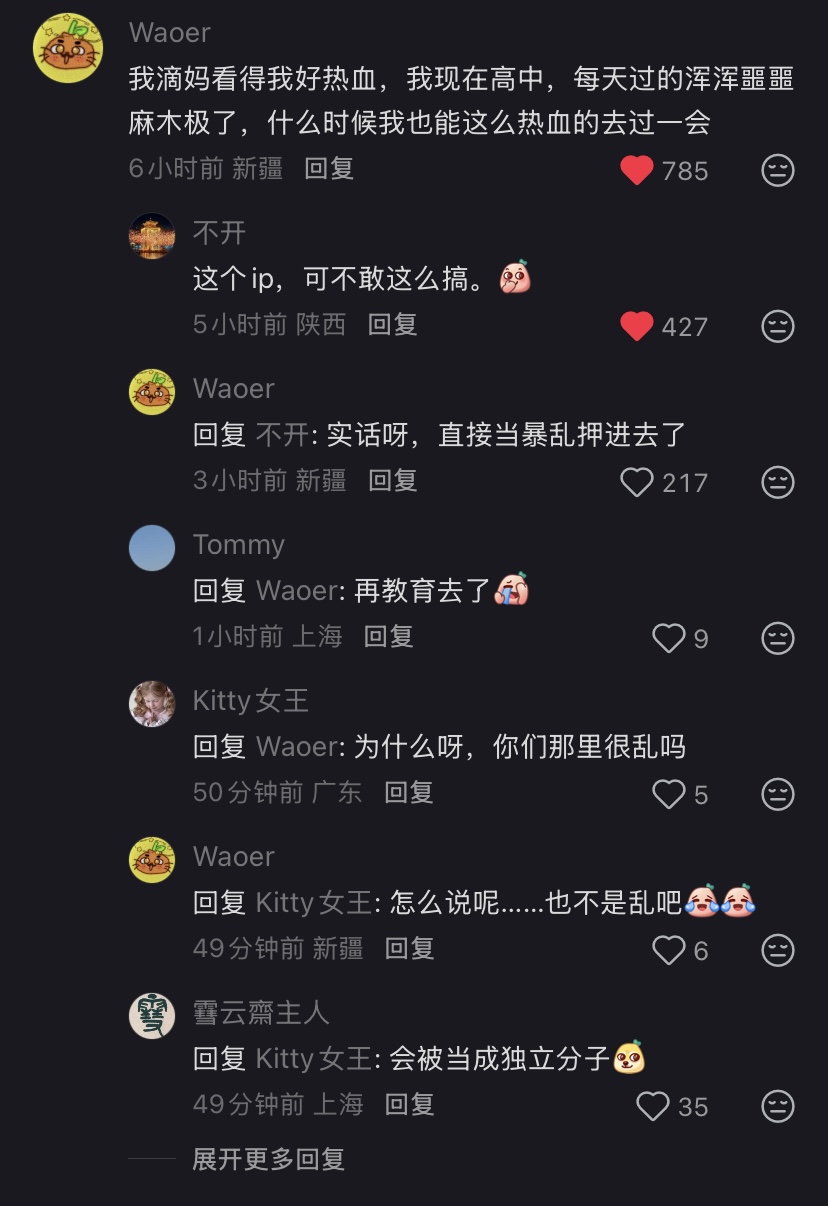
The new高潮 of student movement—review of the student riot in Dezhou, Shandong against online restrictions

  On the evening of February 1st, in Dezhou, Shandong, a school called “Huan Di Xiang Long Quality Education Base,” an internet戒 school, erupted into a nationwide student反网戒 riot. The incident was triggered before the Spring Festival when an instructor violently beat students. For a long time, students had been abused by the戒 school, forced to endure poor food, beatings by instructors, and strict discipline. The anger from these grievances ignited instantly after the event, intertwined with their longing to leave school and return home for the Spring Festival, further fueling their fighting spirit. They united, gathering a large number of students on the night of February 1st, using a surprise attack strategy to control the instructors, then rushing out of the dormitories, wielding wooden sticks, planks, and various heavy objects, smashing the prison-like school buildings that confined their freedom, and finally taking control of the dormitory building. Although the police arrived and sealed off the school, some students ultimately managed to escape and gain their freedom.

  The Dezhou student riot is the first organized violent反网戒 movement by students nationwide, marking a significant development in mass spontaneous movements, and like the 2025 Pucheng Movement and Jiangyou Movement, it is proof of the increasing consciousness of the masses. The Dezhou student riot demonstrates that China’s small bourgeois students, under the brutal fascist education system of the middle修, especially under the inhumane concentration camp-like戒 schools, are no longer willing to be slaughtered by the fascist bandits of the middle修 regime and are determined to resist this predatory old society with their own strength!

  It is reported that this student riot was not a spontaneous act by individuals but the result of long-term organized work by students. An involved student revealed that before his generation, students had already designed a secret language system to counter instructor surveillance and used various covert methods to connect students. By his generation, this connection had expanded to recruiting freshmen, and the movement had developed into a planned direct riot stage. Therefore, the success of this student riot was not accidental but the inevitable result of long-term organization. Through long-term practice, students realized that individual efforts were limited; whether it was escape or resistance, they could not shake the prison they were in. Consequently, they understood that only unity could give them strength. This transformed them from scattered individuals into a powerful force that made oppressors tremble and ultimately flee.

  The significance of the Dezhou student riot is enormous. First, it indicates the current direction of Chinese student movements: from spontaneous, dispersed resistance to conscious, united resistance. Although the number of students involved was not large, it demonstrated high organization, some degree of coordinated action, and leadership—levels not previously achieved in many student movements. Just as the Pucheng Movement was characterized by broad mass participation, and the Jiangyou Movement by the direct喊 anti-fascist slogans, the Dezhou student riot is characterized by students attempting to organize collective action. Like the previous two, it signals that Chinese mass movements are transitioning from a spontaneous to a conscious stage, heralding the further spread of revolutionary Marxist ideas among the masses and calling on revolutionaries to accelerate proletarianization and integrate with mass movements, not lag behind them.

  Second, this riot also signifies the collapse of the reactionary bourgeois ideas and spiritual opium—such as the pursuit of fame and profit, decadence, theft, and the influence of reactionary bourgeois ideology—long instilled into oppressed students by the middle修 regime. As Flame pointed out in “The Road to Future Revolution in China”: “Today’s students are filled with boring, empty, trashy, reactionary low-level interests—movies, TV, animation, novels, games, or love, shopping, gatherings, eating, drinking—without a trace of progressiveness.” However, even so, “the petty bourgeoisie is not an useless class,” “has the potential to turn towards the proletariat.” Despite their shortcomings, students are determined to break free from bourgeois ideology, overcome individualism, and unite to fight against the fascist education system that has inflicted physical and mental harm on countless students and stained their bodies with blood. Even though the middle修 regime has long deliberately imprisoned students in ivory towers detached from the people and labor, and brutalized them with oppressive measures, revolution remains an unstoppable historical tide. This spirit of arming oneself with a machete and rising up indicates that Chinese students, besides being influenced by bourgeois culture and ideas, also have a positive side influenced by proletarian ideology and tend toward revolution. Some opportunists regard China’s petty bourgeois students as reactionary, citing a small group of university students protesting against Israeli aggression in Palestine as “complaining for the fat cat,” and thus criticize all students, claiming they are elite and advocating “making students great again.” This only exposes their arrogance and anti-people stance. Overall, Chinese students are full of hope; they are not a reactionary “reactionary gang” behind foreign countries. Their actions prove their potential to transform into proletarians.

  Finally, this riot has opened a new path for反网戒 movement, strongly criticizing opportunists and ambitious reformists within the movement. The question of revolution versus reform is a crucial issue faced by all revolutionary movements. For a long time, the leadership of the反网戒 movement was controlled by a handful of ambitious reformists, who implemented reformist policies, resulting in stagnation. These people showed no real sympathy for students suffering in戒 schools; instead, they schemed to profit from students’ suffering, using the movement to gain political capital and personal fame. They lived comfortably, enjoying the money, fame, and status brought by the movement, while only mouthing slogans about the “evil” of戒 schools, and crimes of figures like Yang Yongxin and Wu Junbao, without taking any real action to help students. They created various online “反网戒” groups under the guise of mutual aid, raising funds, and even impersonating反网戒 fighters to deceive victims, lure women, and turn the movement into a cesspool of fame and fortune, or a matchmaking venue. Their decayed lifestyle determined that their political line in the反网戒 movement was a reactionary bourgeois reformist line. They dared not organize or mobilize students, nor face the戒 schools directly; thus, they could not truly mobilize students for riot or other revolutionary actions. Instead, they led the movement astray with reformist schemes, which ultimately failed, leaving oppressed students in their original plight. In stark contrast, the students of Dezhou, after long-term oppression, concluded that only unity could give them strength, and only struggle could bring liberation. They used violence to break the fascist concentration camp system of戒 schools, giving a resounding slap to those opportunists on the internet who only talk about反网戒 and advocate reform as the only way out. While this riot does not mean反网戒 should always be violent, it clearly points out the correct direction: persistent ideological struggle, overcoming petty bourgeois individualism and liberalism among students, organizing all oppressed students who can be united, and fighting unrelentingly against the戒 schools and the middle修 government behind them under unified leadership and action. Marxist ideological struggle will proletarianize petty bourgeois students, organize students to fight against fascist education—that is the direction of China’s反网戒 movement and all student movements.

  Now, the path is open, the direction is clear, and what is missing is the integration of revolutionary intellectuals with mass movements. Today, China’s revolutionary petty bourgeois intellectuals are not only lagging behind the spontaneous movements of workers and peasants but even behind the spontaneous student movement. Isn’t this the most shameful thing? If this movement were led by revolutionary Marxists, making it more united, organized, with a clearer program, it would surely achieve greater results. It calls on all revolutionaries to quickly proletarianize and participate in revolutionary movements across oppressed classes and strata. The current world is an era of imperialism and proletarian revolution; China is an era of continuous mass movements; Chinese students are in urgent need of revolution and transformation. Chinese revolutionaries will, together with revolutionary students, transform themselves and participate in this final struggle, contributing their strength to eliminate the exploitation and oppression of humans by humans and the capitalist system.

24 Likes

Indeed, there was also the Yushu incident before. In the end, these opportunists only managed to save Yushu, but only her. What about the other students? Such lone wolf rescue attempts are simply laughable. Those leftist circle members, on the one hand, loudly shout about rescuing Yushu, while on the other hand, they promote the Chinese revisionism, rely on Chinese revisionism, and deceive the masses with pseudo-Marxism. There are also some petty bourgeois rightists who, ignoring the fact that students are under severe oppression in internet addiction recovery schools, first promote victim-blaming, accusing students of “if you hadn’t done this or that first, your parents wouldn’t have sent you to internet addiction recovery schools,” which is very disgusting. In fact, many people now know that internet addiction recovery schools are places of dictatorship over youth. This is an image I found in the comment section of a certain video

9 Likes

They dare not accept the bullies, only the bullied, right? :enraged_face: MD, this group of beasts bullies the soft and fears the hard, so disgusting. But it also shows that they are all show and no substance, not even daring to accept the bullies for fear of causing trouble, only able to oppress the weak and the oppressed.

6 Likes

Yes, this shows that these Nazi organizations are very weak, relying only on suppressing unarmed and weak individuals to survive. When faced with larger, organized movements, they simply cannot withstand them.

6 Likes

It cannot really be said that opportunists saved Yushu; I believe that the rescue of Yushu mainly reflects the heightened enthusiasm of the masses against oppression, but the leadership of the movement was occupied by opportunists, resulting in minimal effect. The initial rescue of Yushu was carried out by her friends who posted videos online to generate buzz and attract many victims with similar experiences and sympathizers, raising public opinion to trending searches, and only then was she rescued. People like gentle Junz, who oppose corrupt officials but not the emperor, rely on reformist police to carry out so-called “rescue” (which can also be seen as reformist control of the situation with white gloves), and opportunists who limit the movement to small reforms and patchwork solutions, have deceived many victims of internet addiction schools and Confucianist families. These people initially gained fame also through the power of the masses. Even now, many online videos and volunteer activities include genuine democratic individuals willing to sacrifice themselves to help victims. The problem is that the leadership of the movement has been occupied by opportunists, and true Marxism has not been widely propagated, making it difficult for the masses to discern the truth for a time.

4 Likes

That’s indeed the case; I was mistaken in my statement.

Fascist China really deserves to die.

7 Likes

And then the robot just stood on the dry bank watching, without taking any action besides a few words?

I’m useless…

As long as you break free from the current state and come back, how could it be useless? Staying at home like this now is pointless; if robots want to be “useful,” they must free themselves from this morally corrupt situation and re-engage in wage labor. I myself am doing very poorly in this regard, and now I can only do chores; wage labor at least has to wait until after October. My political attitude is also very poor, careless and indifferent, and I was previously discovered and criticized by everyone. I still have a long way to go. You used to be an advanced member of the organization, but now you’ve gone backwards. Robots, stop watching on the sidelines, the revolution is approaching day by day!

8 Likes
最初在新人民广场中发送。
jqr

Hey

The lives of young children in China are too tragic now

烽火Flame

Then why do you keep parasitizing?

烽火Flame

Hurry up and join the factory to participate in the struggle!

This way, it can change

jqr

Indeed…

烽火Flame

Then go quickly

3 Likes